Your Emotions Aren't the Problem — Your Lack of Control Over Them Is
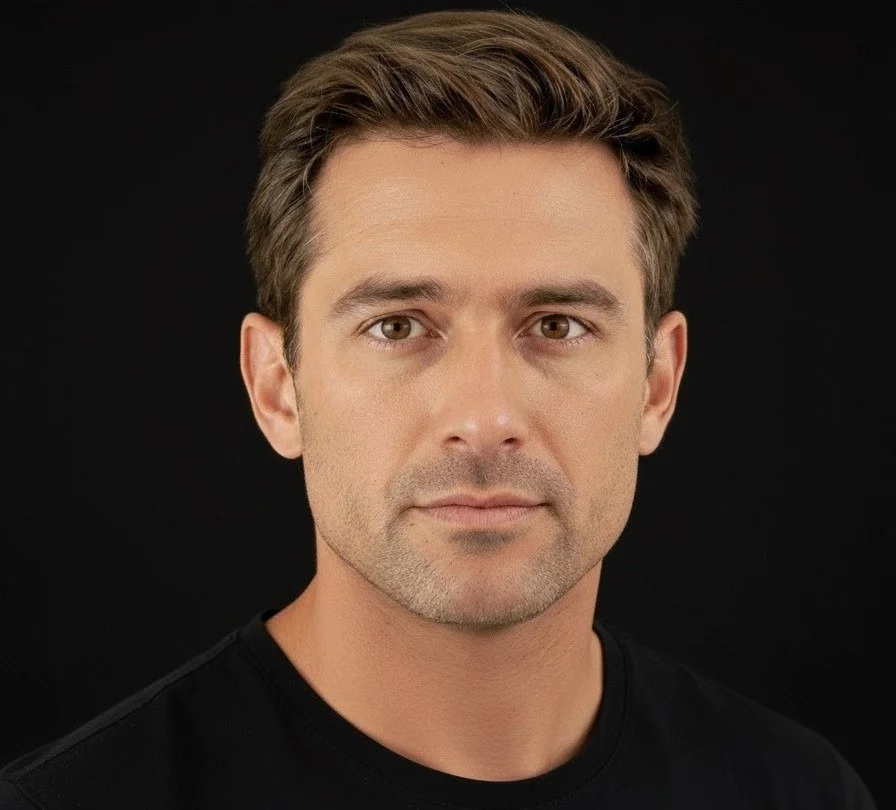
By John Sampson | The Synapse and the Stoa | Philosophy · Neuroscience · Self-Mastery
12 min read | Based on Episode: "The Ancient Engine Running Your Life"
Think about the last time you said something you immediately regretted. The text sent in anger. The words in an argument that came out wrong. The decision you made from fear, or pride, or frustration — the one you were replaying in your head an hour later, thinking:
Why did I do that?
Here's what I want you to know: that moment wasn't a character flaw. It wasn't weakness. And despite what you may have been told, it wasn't because you were
too emotional. Because here's the truth — there is no such thing as being too emotional. What you were experiencing was a gap: the space between feeling something and choosing wisely what to do with it. That gap has a name. Philosophers call it akrasia. Neuroscientists call it the amygdala hijack. And closing it is one of the most important skills any person can develop.
In this post — based on the latest episode of The Synapse and the Stoa [LINK] — we're going to look at why you have emotions in the first place (and why they're not your enemy), what happens in your brain when they take over, what Aristotle and the Stoics understood about this 2,000 years ago, and five practical tools you can start using immediately to develop real emotional control.
"The Ancient Engine Running Your Life" is available on Apple Podcasts, Spotify, and wherever you listen.
First: Stop Blaming Your Emotions
When someone accuses another person of being "too emotional," they're using imprecise language for a real observation. The problem they're pointing at isn't the emotion itself — it's the behavior that followed from it. It's the unchecked reaction, the decision made in the heat of the moment, the words that came before the thought.
Emotions aren't noise in the system. They are the system — at least part of it. Every major emotion you've ever felt evolved over millions of years to solve a specific survival problem:
• Fear evolved to keep you alive in the presence of physical danger.
• Anger evolved to signal that a boundary has been crossed — that something unjust has happened.
• Sadness evolved as a social signal for loss, drawing support from your group when you're vulnerable.
• Guilt evolved to keep you in line with cooperative social norms so you wouldn't be cast out of the tribe.
• Even attachment — that deep, bone-level pull toward the people you love — evolved to ensure that helpless human infants survived long enough to grow up.
Antonio Damasio, one of the leading neuroscientists of the 20th century, spent years studying patients whose emotional centers had been damaged by brain injury. These people were cognitively intact — high IQ, sharp memory, sound logical reasoning. And yet they were catastrophically bad at making everyday decisions. Without the emotional signal — without the body's input on what mattered — the rational brain had no way to weigh its options. Damasio called these body-based guidance signals
somatic markers, and his research demonstrated something counterintuitive: emotion isn't the opposite of good decision-making. In many cases, it is the decision-making.
"Emotions carry important information for us to act on. Anger signals injustice. Sadness signals loss. Fear signals danger. Trying to suppress these emotions doesn't make them go away — it just makes you worse at reading the room."
What Happens When Your Brain Gets Hijacked
If emotions are so useful, why do they cause so much damage in our lives? The answer starts in the architecture of the brain itself.
Your brain has two primary pathways for processing emotional information. Psychologist Daniel Goleman, drawing on the work of neuroscientist Joseph LeDoux, described these as the "low road" and the "high road."
The low road is fast. Brutally fast. Sensory information bypasses your thinking brain entirely, going straight from the thalamus to the amygdala — your brain's threat detection center — in as little as 12 milliseconds. This triggers a cascade: the hypothalamic-pituitary-adrenal axis fires, flooding your body with cortisol and adrenaline. Blood redirects from your prefrontal cortex — the seat of rational thought — to your large muscle groups. Your working memory degrades. Your ability to see multiple perspectives collapses. You are, in the most literal neurological sense, unable to think as clearly.
The high road is slower and more accurate. It routes information through the sensory cortex and prefrontal cortex, where context, nuance, and long-term consequence can be weighed. The high road is what lets you respond instead of react.
Goleman called what happens when the low road overwhelms the high road an
amygdala hijack — and the critical problem in the modern world is this: your amygdala cannot tell the difference between a charging predator and a passive-aggressive email from your boss. It treats both with the same biological urgency. The same ancient survival response that kept your ancestors alive is now firing in response to traffic, social media, difficult conversations, and late-night arguments.
THE MISMATCH PROBLEM
Your emotional hardware was designed for a world of immediate, physical, concrete threats. You now live in a world of chronic, abstract, psychological ones — and the gap between those two realities is where most of our emotional dysregulation lives.
What Aristotle Knew 2,300 Years Ago
Long before we had fMRI machines or neuroscience, the ancient philosophers were working through the same problem with remarkable precision.
Aristotle — writing in the Nicomachean Ethics around 350 BCE — rejected two extreme views of emotion. He rejected the Socratic idea that emotions were simply errors of judgment to be corrected by knowledge. And he rejected the idea, popular among some of his contemporaries, that emotions were purely disruptive forces to be suppressed. Instead, Aristotle argued that emotions are cognitive — that they involve genuine evaluations of the world. Anger, for Aristotle, isn't just a feeling; it's a perception that an injustice has occurred. Fear isn't irrational; it's the judgment that something dangerous is approaching. To be human, to feel these things, is to be engaging with reality.
But Aristotle also identified the gap. He called it akrasia — weakness of will. Acting against your own better judgment. Knowing what you should do, and doing something else anyway because a passion overwhelmed your reason. He observed this not as a character flaw unique to certain individuals, but as a near-universal feature of human experience.
"Anyone can become angry — that is easy. But to be angry with the right person, to the right extent, at the right time, with the right motive, and in the right way — that is not within everybody's power and is not easy." — Aristotle, Nicomachean Ethics
That passage is more than a memorable quote — it's a precise description of what emotional regulation actually requires. Aristotle called the correct middle point between too much emotion and too little the
mean — not a mathematical average, but the right response for the right situation, calibrated by mature judgment. He believed this could be developed through habituation: the repeated practice of choosing the right response until it becomes part of your character. You don't become emotionally regulated by reading about it. You become emotionally regulated by practicing it, repeatedly, until the practice becomes who you are.
The Stoics: Feeling Without Being Ruled
The Stoic philosophers — Seneca, Epictetus, Marcus Aurelius — are often mischaracterized as advocates for emotional suppression. The caricature of the Stoic is a stone-faced man who feels nothing and cares about less. This is almost entirely wrong.
The Stoics made a crucial distinction that modern neuroscience has essentially rediscovered. They recognized two categories of emotional response:
• Propatheiai — Propatheiai
Involuntary pre-cognitive reactions: the flinch at a sudden sound, the pulse of adrenaline in a tense moment, the blush when caught off guard. Seneca acknowledged that even the wisest person experiences these. They are biological signals — information — and the Stoics did not consider them failures.
• Pathē (Passions) — Pathē (Passions) —
The full emotional response, which involves an act of assent — a cognitive endorsement of a value judgment. When you feel the sting of an insult and then consciously agree that "I have been wronged and I should retaliate," you've crossed from propatheiai into a passion. And that crossing is where choice enters.
Epictetus offered the most powerful practical instruction:
"Make it a practice at once to say to every strong impression: you are an impression, not the source of the impression. Allow me to put you to the test."
In other words: before you act on what you feel, pause long enough to examine it. Is this feeling an accurate read of what's happening? Is the threat real? Is the slight genuine? That gap — between the feeling and the act — is where your freedom lives.
Seneca went further in De Ira (On Anger), his extended essay on the most destructive of the passions. He described anger as a "short madness" — and observed that once you let it in, once you grant it authority over your reason, it becomes stronger than its ruler. His warning:
"It is easier to exclude harmful passions than to rule them — and to deny them admittance than, after they have been admitted, to control them."
The door, in other words, is always easier to guard than the fire is to fight.
The Science of Why Most of Us Struggle
Modern psychology has added two more layers to the picture that the ancient philosophers couldn't have known — but would have recognized immediately.
The Hot-Cold Empathy Gap
Psychologist George Loewenstein identified what he called the hot-cold empathy gap: when you're calm ("cold"), you consistently and dramatically underestimate how much emotional arousal will affect your behavior in a future "hot" state. You tell yourself you'll be rational when the moment comes. You won't. And when you're already in the hot state — flooded with emotion — you overestimate how permanent your current feelings are. That's why everything feels catastrophic at 2am and manageable in the morning.
This gap explains the pattern most of us know well: the confident pre-commitment ("I won't lose my temper") that collapses under actual pressure. Your calm self simply cannot simulate what your hot self will experience.
Ego Depletion: Self-Control Is a Finite Resource
Psychologist Roy Baumeister's research produced one of the most practically important findings in modern psychology: self-control functions like a muscle that fatigues with use. Every act of willpower — every difficult decision, every temptation resisted, every emotion managed — draws from a single, finite daily resource. He called this depletion of the executive self
ego depletion. And like any muscle, once it's fatigued, performance degrades.
This is why you're more likely to snap at someone you love after a long, draining workday. It's not that your love for them has diminished. It's that your regulatory budget is exhausted. The tank is empty by 9pm. Knowing this isn't an excuse — it's a strategic insight. It tells you when to have hard conversations (not when depleted), when to make important decisions (not under stress or fatigue), and why building automatic habits matters so much — because habits bypass the willpower cost entirely.
KEY INSIGHT
You're not bad at self-control. You may simply be running on empty. Emotional regulation isn't just about character — it's about managing a physiological resource strategically.
5 Practical Tools for Emotional Mastery
Everything above — the philosophy, the neuroscience, the psychology — converges on the same practical destination. Here are five tools drawn from that convergence that you can begin using immediately.
1. Name It to Tame It
The single most powerful thing you can do in a moment of emotional intensity is to precisely label what you are feeling. Not "I'm upset" — that's too vague to work with. Try:
"I am feeling humiliated." "I am feeling afraid." "I am feeling disrespected."
Neuroscience calls this affect labeling, and research consistently shows it reduces amygdala activation — literally turning down the volume on the emotional signal. When you put language to a feeling, you engage your prefrontal cortex. You create a small but crucial gap between what you feel and what you do. That gap is everything.
2. The Stoic Pause — 90 Seconds
Neuroscientist Jill Bolte Taylor found that the physiological surge of an emotion — the hormonal cascade that drives the hijack — metabolizes in approximately 90 seconds. After that window, any emotion you're still experiencing is being actively re-triggered by your thoughts.
So the rule is simple: when you feel a strong emotional reaction, do not act for 90 seconds. Don't send the message. Don't make the call. Don't start the argument. Set a timer if you have to. Give your prefrontal cortex time to come online. This is precisely what Epictetus was describing — the practice of putting the impression to the test before granting it authority.
3. Pre-Commit When You're Cold
Because the hot-cold empathy gap makes it impossible for your hot self to make good decisions, your cold self has to make them in advance. When you are calm — right now — decide how you want to behave when you're not calm:
• "When I'm angry in an argument, I will take a ten-minute break before continuing."
• "When I receive critical feedback, I will say thank you and reflect before I respond."
• "When I'm stressed about money, I will not make any financial decisions for 24 hours."
Write these down. These are pre-commitments — rules your regulated self makes for your triggered self. This is not weakness. This is the most sophisticated form of emotional strategy available to you.
4. Protect Your Regulatory Resource
Given that self-control depletes, your job is to manage the budget. Some practical strategies:
• Make your most important decisions earlier in the day, before the resource drains.
• Protect sleep — sleep deprivation is one of the fastest ways to destroy prefrontal function and emotional resilience.
• Build emotional habits — responses that are automatic require no willpower budget at all. The Stoics called this habituation. Neuroscientists call it neuroplasticity.
• Don't schedule difficult conversations late at night or when either party is hungry, tired, or already depleted.
5. Reframe the Signal — Work With the Emotion, Not Against It
Finally — and most importantly — stop treating your emotions as the enemy. They carry genuine information. Your job is to decode that information without being enslaved by it.
When you feel anger, ask: What injustice or boundary violation is this pointing to? Is that perception accurate?
When you feel fear, ask: What is the actual threat here? Is it as dangerous as it feels right now, or is my ancient alarm system misfiring in a modern context?
When you feel guilt, ask: Have I actually done something that conflicts with my values — or am I responding to someone else's expectations?
This is what Aristotle called distinguishing between reasonable and unreasonable emotional responses — evaluating whether the cognition embedded in the feeling is actually accurate. And it's what the Stoics meant by testing impressions before granting them assent. You are not trying to feel less. You are trying to feel more accurately. More wisely. More in proportion to what is actually happening.
The Integration — Ancient and Modern, Converging on the Same Truth
Here is what Aristotle, the Stoics, Damasio, Baumeister, Goleman, and Loewenstein all agree on, across 2,300 years and multiple disciplines:
Emotions are not your enemy. They are some of the most sophisticated tools in the human toolkit — finely tuned by millions of years of evolution to help you survive, connect, make meaning, and navigate a complex world. The problem is not that you feel deeply. The problem is whether you have learned to channel that depth toward constructive ends.
You are running ancient hardware in a world it was never designed for. That hardware is not defective. But it needs a skilled operator.
The goal is not to become emotionless. The case of Damasio's patients makes clear that an emotionless decision-maker is a broken one. The goal is to become emotionally intelligent — to feel fully, to feel accurately, and to choose wisely what you do with what you feel.
That is not a natural gift. It is an acquired skill. And like every skill, it improves with practice, attention, and the willingness to start.
"The goal isn't to silence your emotions. It's to understand the ancient engine driving your life — and learn to steer it with skill, instead of being dragged by it." — John Sampson, The Synapse and the Stoa
🎧 LISTEN TO THE FULL EPISODE
"The Ancient Engine Running Your Life" — The Synapse and the Stoa. Available on Apple Podcasts, Spotify, and wherever you get your podcasts. In the full episode, John covers the complete Aristotelian framework of emotional virtue, the Stoic concept of eupatheia (good feelings), the neuroscience of ego depletion in detail, and a deeper breakdown of all five practical tools.
Key Concepts & Further Reading
• Aristotle. Nicomachean Ethics. Books II, III, and VII on virtue, emotion, and akrasia.
• Seneca. De Ira (On Anger). A practical treatise on the most destructive of the passions.
• Epictetus. Discourses, Book 2, Chapter 18. On habits, impressions, and the discipline of assent.
• Damasio, A. Descartes' Error: Emotion, Reason, and the Human Brain (1994).
• Goleman, D. Emotional Intelligence: Why It Can Matter More Than IQ (1995).
• Baumeister, R. et al. "Ego Depletion: Is the Active Self a Limited Resource?" Journal of Personality and Social Psychology (1998).
• Loewenstein, G. "Hot-Cold Empathy Gaps and Medical Decision Making." Health Psychology (2005).
• Bolte Taylor, J. My Stroke of Insight (2008). On the 90-second emotional surge window.
The Synapse and the Stoa | Philosophy. Neuroscience. Practical Wisdom. | Hosted by John Sampson